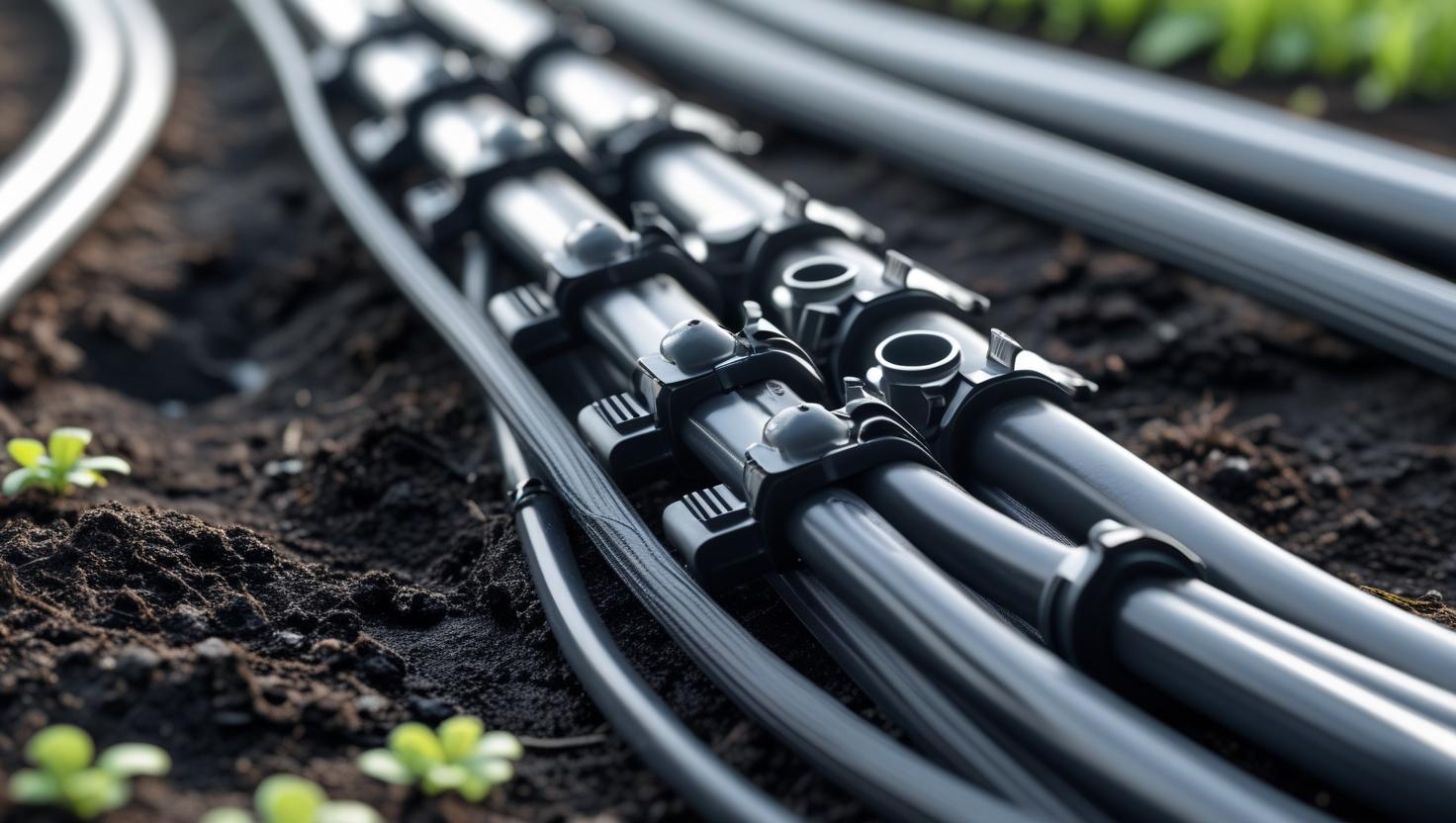
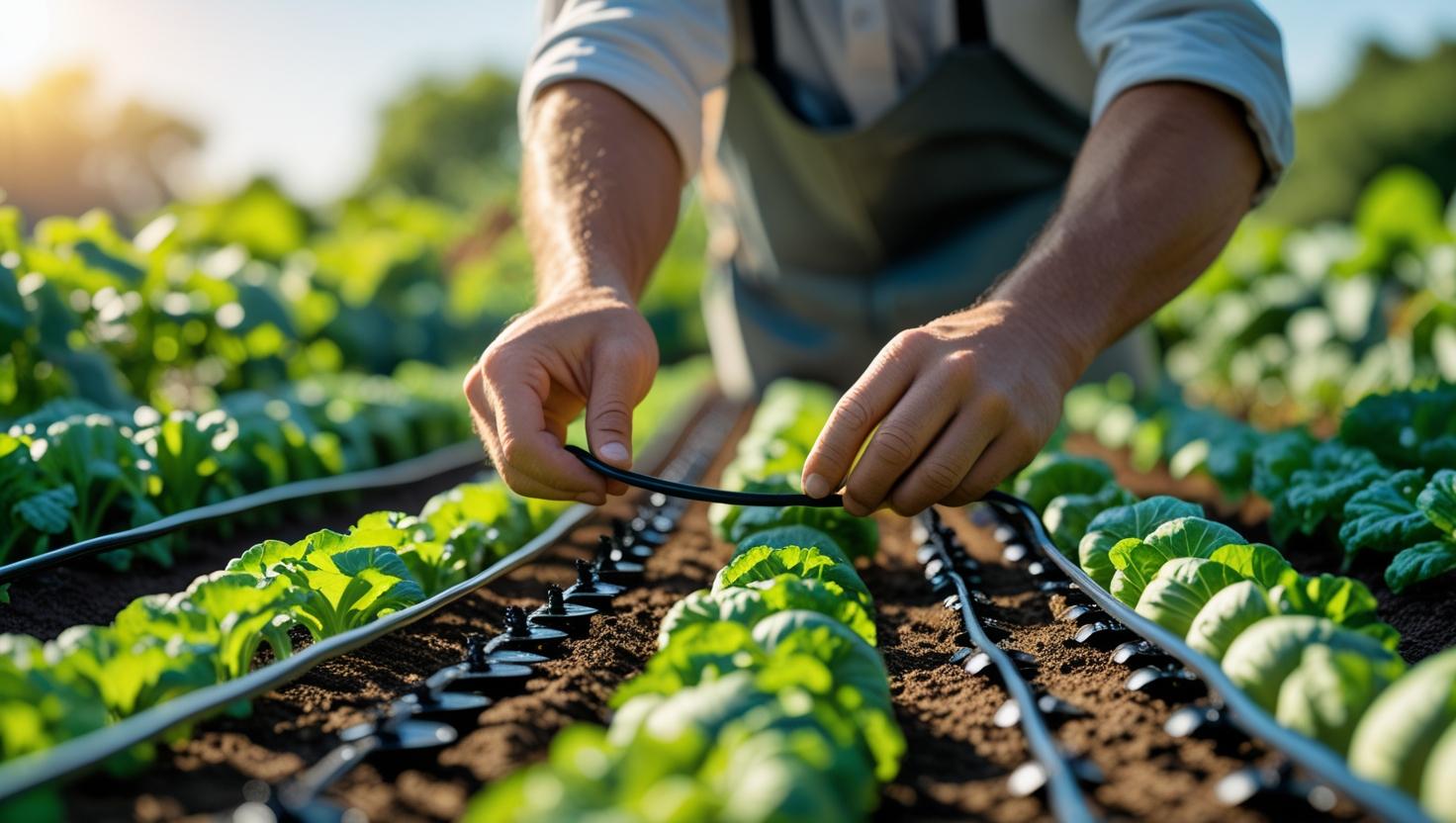
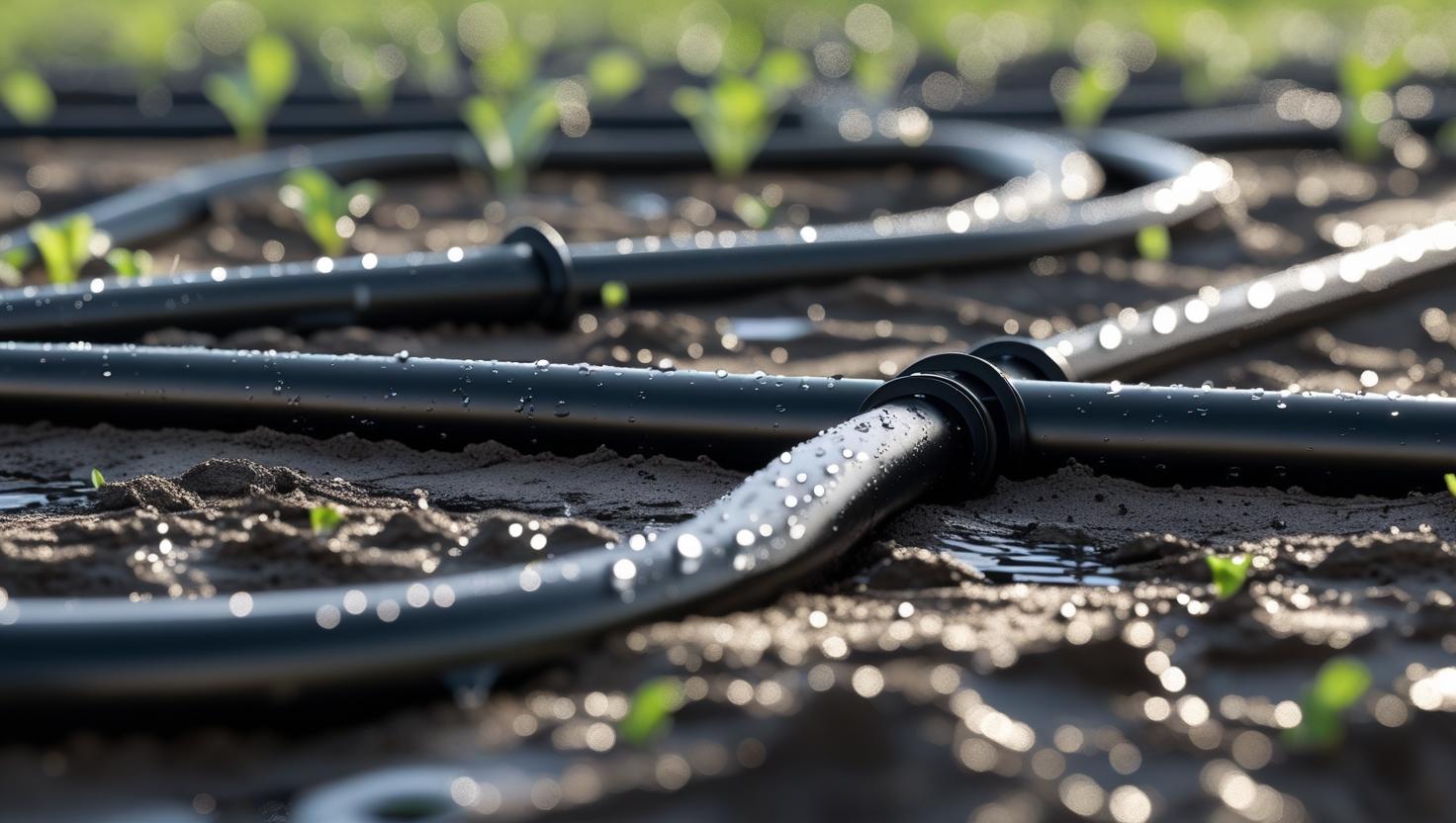
Drip tape is a thin, flexible polyethylene tube featuring integrated emitters at regular intervals along its body. Designed to deliver water uniformly and precisely to the root zone of plants, drip tape is widely used in surface-level drip irrigation systems for agricultural fields, orchards, and greenhouses.
Drip tapes are particularly suited for row crops and seasonal cultivations, such as vegetables, corn, cotton, strawberries, and melons. As one of the most cost-effective solutions in low-pressure irrigation systems, drip tapes play a vital role in enhancing irrigation efficiency, reducing water consumption, and optimizing fertilizer delivery.
Technical and Scientific Features
- Various thicknesses available: Usually from 150 to 250 microns (0.15 to 0.25 mm)
- Emitter spacing: Typically between 10 and 30 cm, depending on crop type
- Flow rate: Ranging from 1 to 4 liters per hour per emitter
- Optimal working pressure: 0.6 to 1.0 bar (low pressure)
- Anti-clogging design with turbulent flow path
- Uniform water distribution over long distances
- Eco-friendly and recyclable material
Industrial and Agricultural Applications
Drip tapes are a key component of modern irrigation systems, especially in arid climates and light soils. Common applications include:
- Seasonal row crops: Tomatoes, watermelons, cucumbers, potatoes, beans, chickpeas, and more
- Greenhouse drip irrigation systems
- Herbal and medicinal crops in saline or sandy soils
- Enhanced yield and controlled fertigation (nutrient delivery through irrigation)
Economic and Commercial Advantages
- Significant water savings (up to 50–70% compared to surface irrigation)
- Low implementation and operation costs
- Easy installation without heavy equipment
- Precise fertilizer and chemical application through fertigation
- Suitable for one or multiple seasons, depending on tape thickness
- Increased crop productivity and quality
Common Technical Specifications
| Feature |
Common Values |
| Tape thickness |
150, 175, 200, 250 microns |
| Diameter |
16 mm (most commonly used size) |
| Emitter spacing |
10, 20, 30 cm |
| Flow rate per emitter |
1 – 2 – 4 L/h |
| Standard roll length |
1000 to 3000 meters |
| Recommended working pressure |
0.6 to 1 bar |
| Tape color |
Typically black, or black with blue/green stripes |
Comparison: Drip Tape vs. Dripline
| Feature |
Drip Tape |
Dripline (PE pipe with emitters) |
| Working pressure |
Low (0.6 to 1 bar) |
Medium to high (1 to 4 bar) |
| Lifespan |
Seasonal or short-term use |
Long-term (up to 10 years) |
| Cost |
Very low |
Moderate to high |
| Flexibility |
Very high |
Moderate |
| Typical applications |
Seasonal row crops, greenhouses |
Orchards, vineyards, perennials |
Best Practices for Drip Tape Use
- Use appropriate sand and screen filters to prevent emitter clogging
- Avoid excessive pressure to prevent tape bursting
- Bury or cover tape with soil or mulch to protect from UV damage
- Use specialized fittings and connectors for reliable field installation